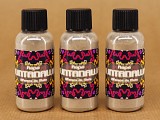
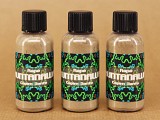
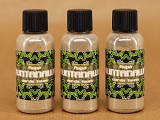
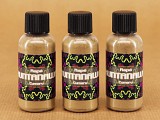
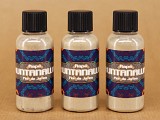
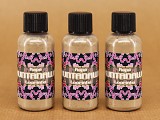
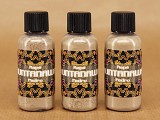
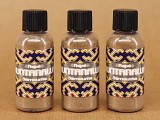
Pot, 60 Ml, 40 Gr from Brazil (SKU 6194)
(Batch #2880). Kuntanawa Tipy is a traditional forest Rapé made with artisanal Sabiá Corda Tabaco, Tsunu ashes and Tipy (Petiveria alliacea), a sacred plant associated with cleansing, protection and opening paths. According to the Kuntanawa, Tipy is harvested during the crescent moon accompanied by a special prayer from the Pajé. Sabiá Corda provides a deep, strong and grounding Tabaco base, while Tsunu is one of the classic ashes of traditional Rapé. Together they create a powerful preparation for ceremonial cleansing, introspection and renewed direction, reflecting the Kuntanawa's living relationship with the forest and its plant medicines. More information can be read below.
Packed in 60 ml clear PETG pots containing 40 gr.


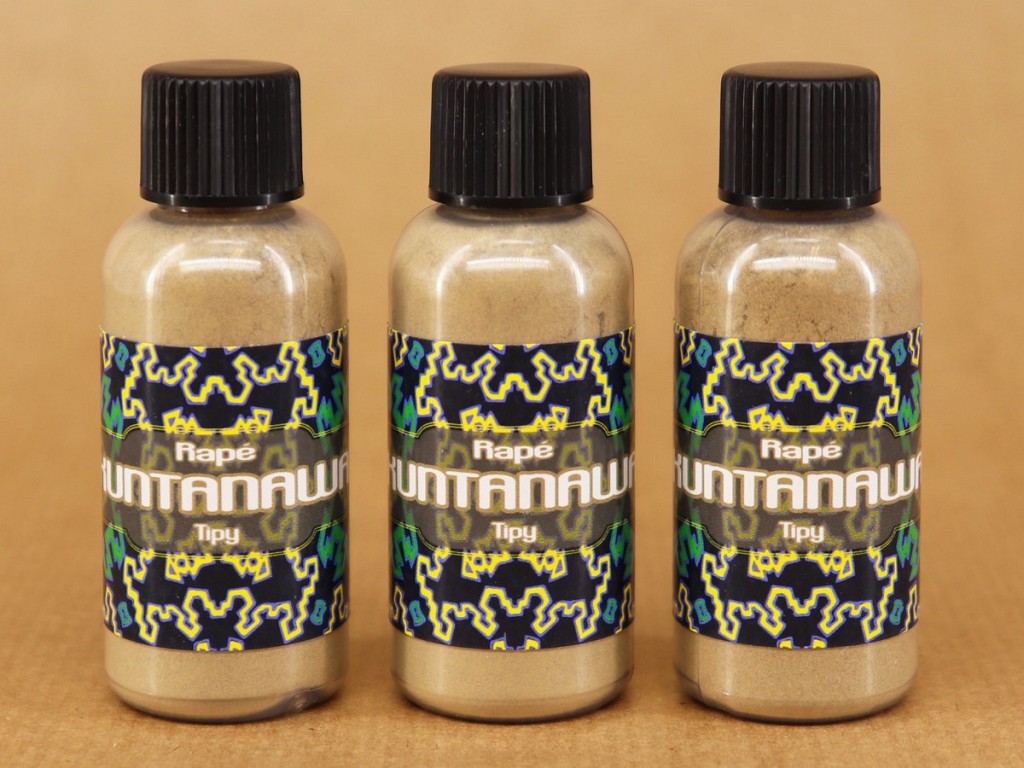

Kuntanawa Tipy Rapé
Kuntanawa Tipy is a traditional forest Rapé prepared with artisanal Sabiá Corda Tabaco, Tsunu ashes and Tipy (Petiveria alliacea), a strongly aromatic plant with a long history of medicinal, spiritual and ritual use in Brazil. Within the Kuntanawa tradition, Tipy is regarded particularly as a plant of cleansing and protection, used to clear unwanted influences and help open the path ahead.
The Medicine of Tipy
Tipy, also written Tipi and known elsewhere in Brazil as Guiné or Erva-de-Tipi, is Petiveria alliacea, a perennial plant native to tropical America. When its leaves and other parts are crushed, the plant releases a distinctive pungent, almost garlic-like aroma, characteristic of the naturally occurring sulphur compounds found within it. The plant has an established place in Brazilian traditional plant knowledge and is used in different regions in herbal preparations as well as in spiritual and ceremonial practices.
Its association with cleansing and protection extends beyond the Kuntanawa. In different Brazilian traditions, Tipy or Guiné has long been incorporated into cleansing baths and ritual preparations intended to purify people and places and protect against unwanted spiritual influences. This broader traditional use closely reflects the qualities attributed to Tipy by the Kuntanawa, where the plant is regarded as an important ally for purification, protection and the opening of paths.
According to information passed to us from the Kuntanawa, the harvesting of Tipy used for this medicine follows a particular tradition. The plant is collected during the crescent moon, accompanied by a special prayer from the Pajé, the traditional healer and spiritual specialist of the community. In this way, the preparation of the Rapé begins long before the ingredients are finally combined. The manner in which the plant is approached, harvested and prepared forms part of the medicine and of the intention carried into it.
Cleansing, Protection and Opening the Path
Within Kuntanawa plant tradition, Tipy is particularly associated with spiritual cleansing and protection. The herb is also used in baths, smudging and other traditional preparations intended to cleanse a person, ceremonial space or surrounding environment. It is regarded as a plant capable of transforming unwanted or stagnant energies and is traditionally associated with "opening paths" where movement or direction has become obstructed.
This gives Kuntanawa Tipy a distinctly protective and cleansing character. Tipy is not simply an aromatic addition to the Rapé, but an important part of its ceremonial purpose. Together with the Sabiá Corda Tabaco and Tsunu ashes, it creates a preparation traditionally associated with purification, introspection and renewed direction.
Character of the Rapé
The foundation of this blend is artisanal Sabiá Corda Tabaco combined with Tsunu ashes, giving the Rapé a strong and grounded base. Tipy adds its particular forest medicine and the qualities for which it is valued by the Kuntanawa. The resulting preparation is especially suited to ceremonial moments of cleansing and introspection, when attention is brought inward and space is created for greater clarity and a renewed sense of direction.
Kuntanawa Tipy can therefore be understood as a Rapé of cleansing, protection and realignment: grounded by the Tabaco, strengthened by the Tsunu ashes and given its distinctive spiritual character by Tipy, a plant traditionally regarded as an ally for purification and the opening of paths.
Tsunu Ashes
Alongside the Sabiá Corda Tabaco, the mineral foundation of this Rapé is provided by Tsunu ashes. Tsunu is one of the classic ashes used in traditional Rapé preparations and is produced through the careful burning and processing of selected tree bark. The resulting fine, alkaline ash is an essential part of the character and composition of the Rapé rather than simply a secondary ingredient. Within Indigenous traditions, Tsunu is commonly associated with grounding, strength, cleansing and connection with the forest. In this preparation it forms a strong traditional base for the Tipy, supporting the distinctly cleansing and protective character for which this Kuntanawa Rapé is intended. Read more about Tsunu here.
Sabiá Corda Tabaco
The Tabaco used in this preparation is artisanal Sabiá Corda, a traditional Brazilian rope Tabaco made by twisting and tightly rolling the prepared leaves into a dense cord for curing and maturation. Corda Tabaco is widely used as a foundation for Rapé because of its strength, depth and full-bodied character. Sabiá is a particularly respected variety, providing a powerful and grounding Tabaco base upon which the other ingredients of the medicine can express themselves. In Kuntanawa Tipy, its deep character combines with the Tsunu ashes and the cleansing presence of Tipy, giving the blend both substance and strength while supporting its more protective and introspective qualities. Read more about Sabia Corda here.
The Kuntanawa
The Kuntanawa are an Indigenous people of the Brazilian state of Acre, in the western Amazon, whose culture is closely connected with the forest and its traditional plant medicines. Like several neighbouring peoples of the region, they experienced a long period in which much of their ancestral culture was threatened or suppressed, followed by a determined process of cultural revival. Rapé, Ayahuasca and the knowledge surrounding medicinal and sacred plants have become important elements within this renewal. Kuntanawa Rapés reflect this living relationship with the forest, combining traditional ingredients with plants chosen for their particular purpose and significance. Tipy is one such medicine, valued especially for cleansing, protection and the opening of paths. Read more about the Kuntanawa here.
Setting the Standard for Ultra-Fine Rapé
We take great care to reprocess all received stock to ensure the finest quality powder. Often, Rapé arrives with varying levels of fineness due to the lack of professional sieves used by the tribe. To address this, we meticulously sieve all powders to remove rough bits and particles, resulting in a smooth and effective powder at 250-micron fineness—slightly less fine than most of our Rapé. We use laboratory-grade sieves and dehydrating equipment to achieve this quality. This is our standard because it provides the best Rapé experience.
Disclaimer
The information provided above is for historical, educational, and scientific purposes only. It should not be interpreted as a recommendation for the specific use of our products. Any statements about traditional uses are informational. The use and application of our products are the customer's decision and responsibility.
Copyright Notice
All content, including this article, is protected under copyright law. Any unauthorized reproduction, distribution, or use of this material is prohibited. Duplication of this content, in whole or in part, without written consent, is a violation of copyright regulations.
Other names: Sapota, Zapota, Tipy.
This item is not allowed in the following countries:
Finland
This natural product is offered for its ethnographic and historical value and is delivered with no expressed or implied fitness for a specific purpose. It is simply a raw botanical specimen, or a scientific sample. The information provided is purely meant for historical, scientific and educational purposes and should never be interpreted as a recommendation for a specific use. The use and application of our product is at the customer's decision, responsibility and risk.
Read our Terms & Conditions for more details.