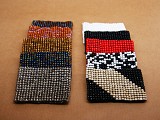
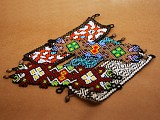
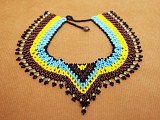
27 X 34 Cm from Peru (SKU 6210)
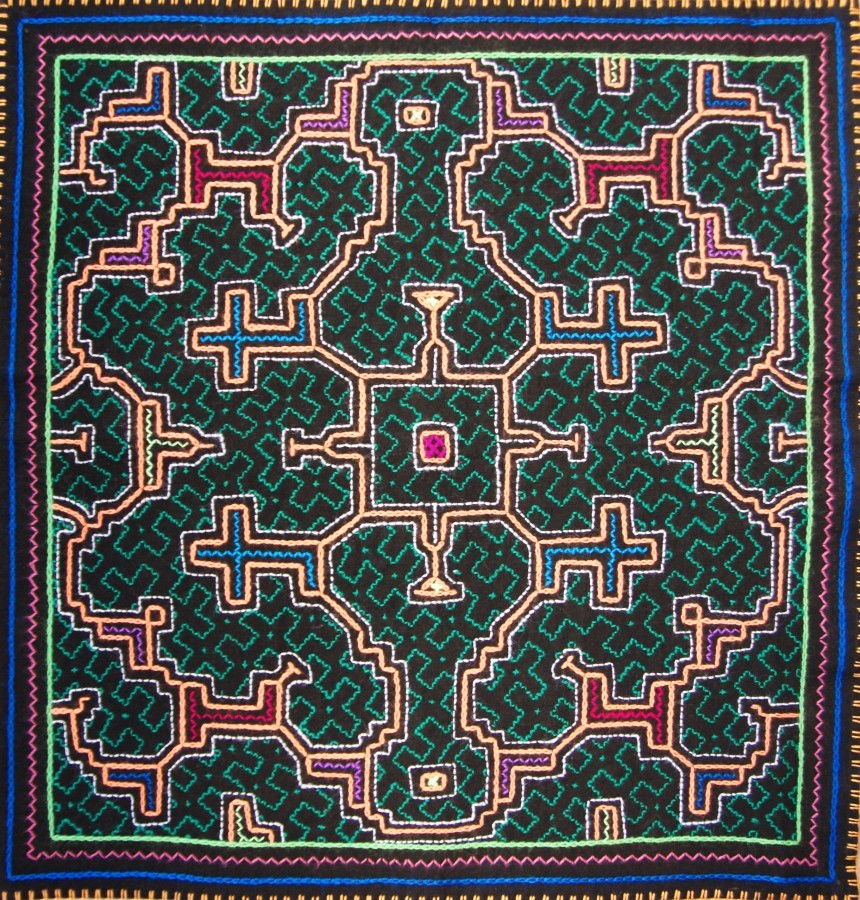
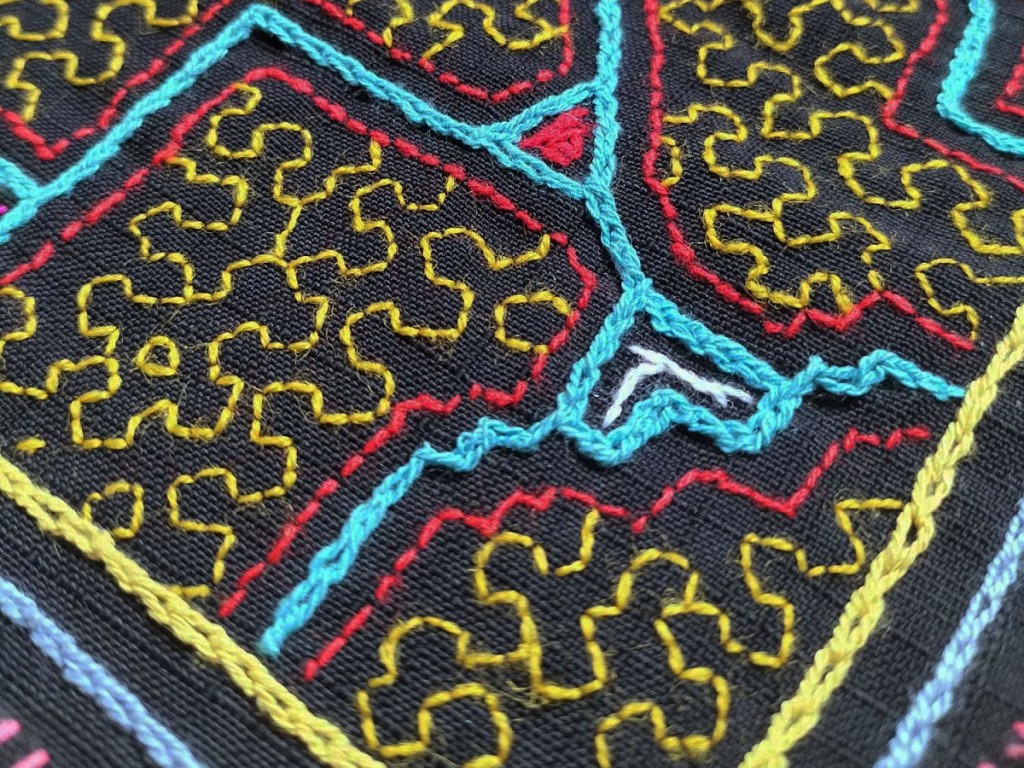
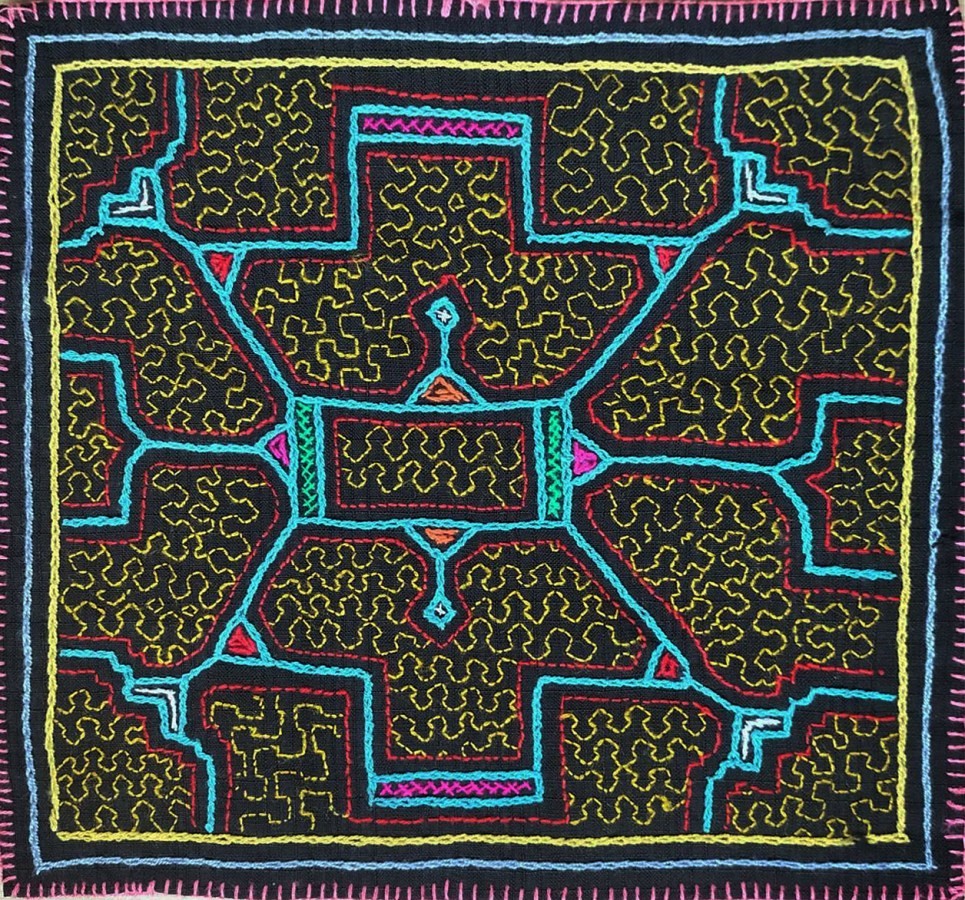
Handmade Shipibo ceremonial altar cloth, embroidered with the intricate geometric patterns known as "Kené". Created on traditionally prepared cotton cloth, each piece is a unique expression of the remarkable visual tradition of the Shipibo-Konibo people of the Peruvian Amazon. Within Shipibo ceremonial understanding, Kené is far more than decoration: the patterns are associated with harmony, protection, balance and spiritual order, and are closely connected with the sacred songs known as "Icaro". Different designs may carry particular intentions or qualities, traditionally associated with protection, wisdom, healing or abundance. These exceptional small-format cloths come from a collection preserved for approximately two decades and were originally selected for their particularly beautiful patterns, precision and vivid colours. Detailed information on Shipibo Kené, Icaro and the tradition behind these textiles can be read below.
Size: 27 x 34 cm. Thickness 2 mm. Image colour may vary slightly from actual product. Hand wash cold only.




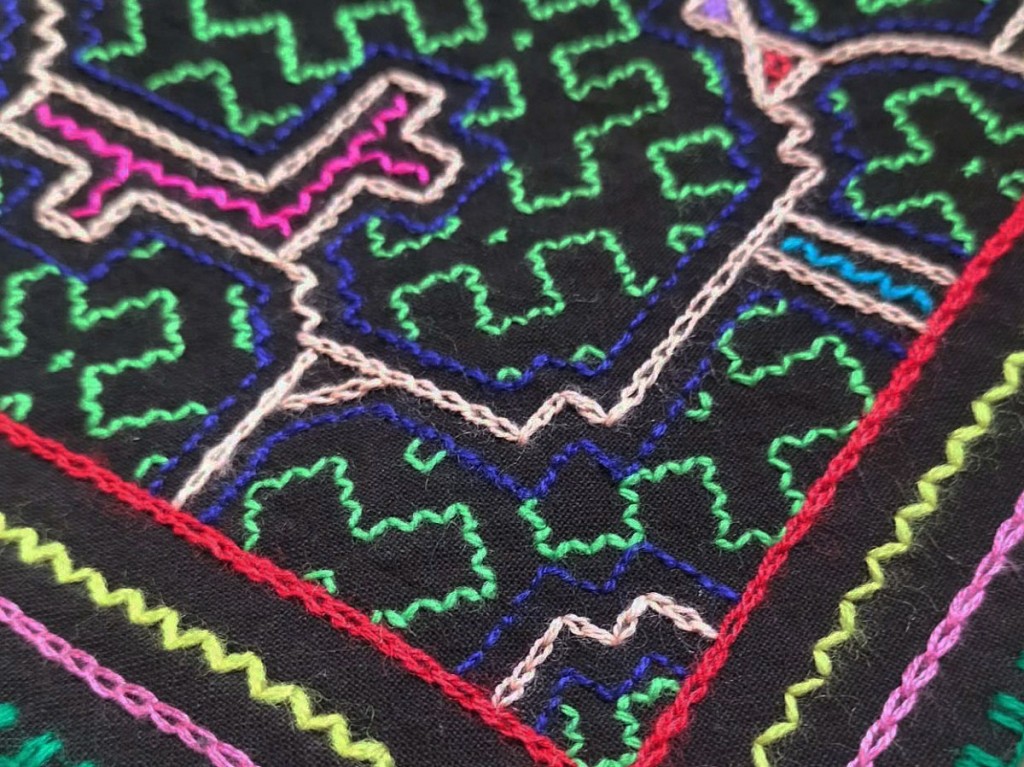
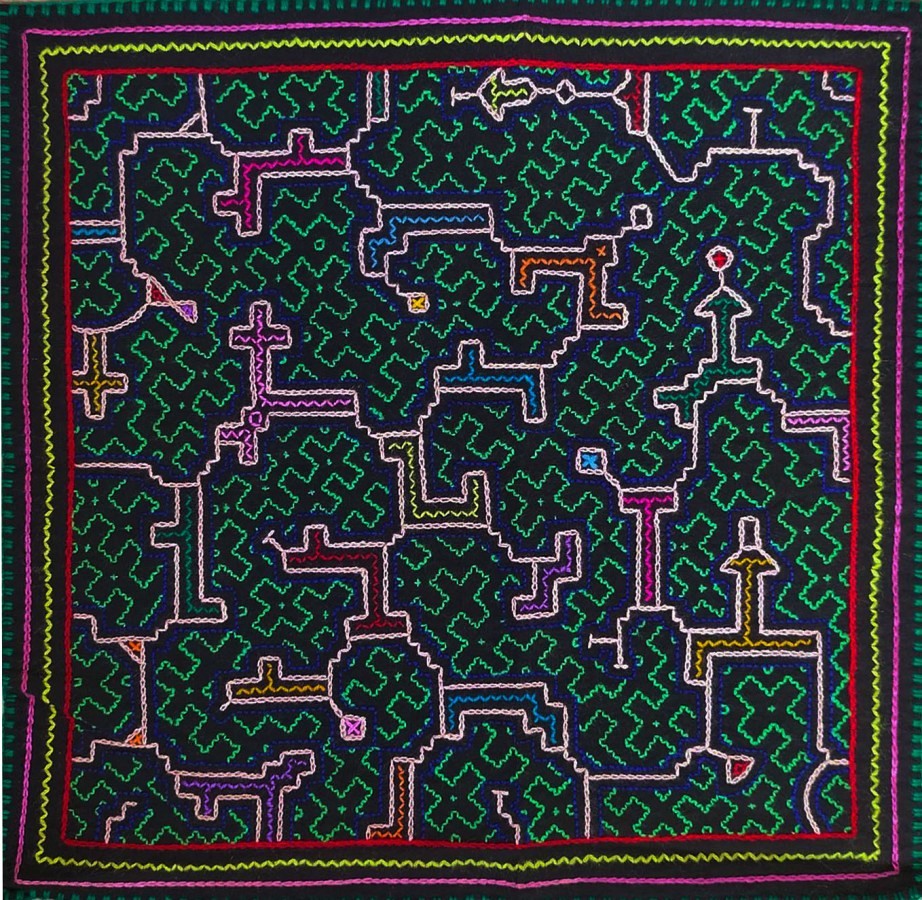

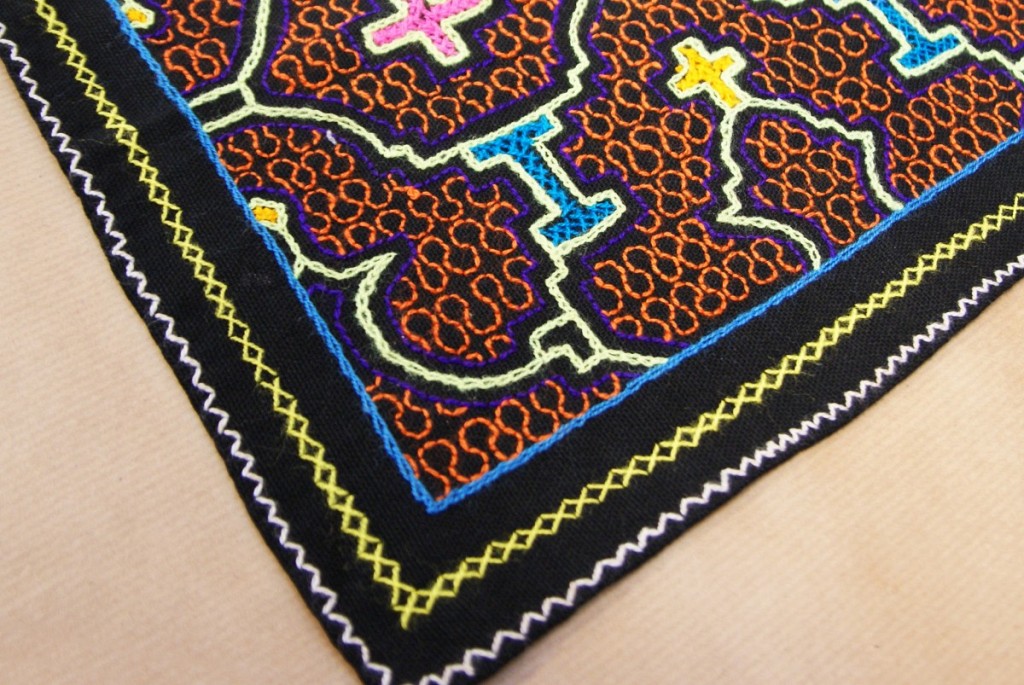

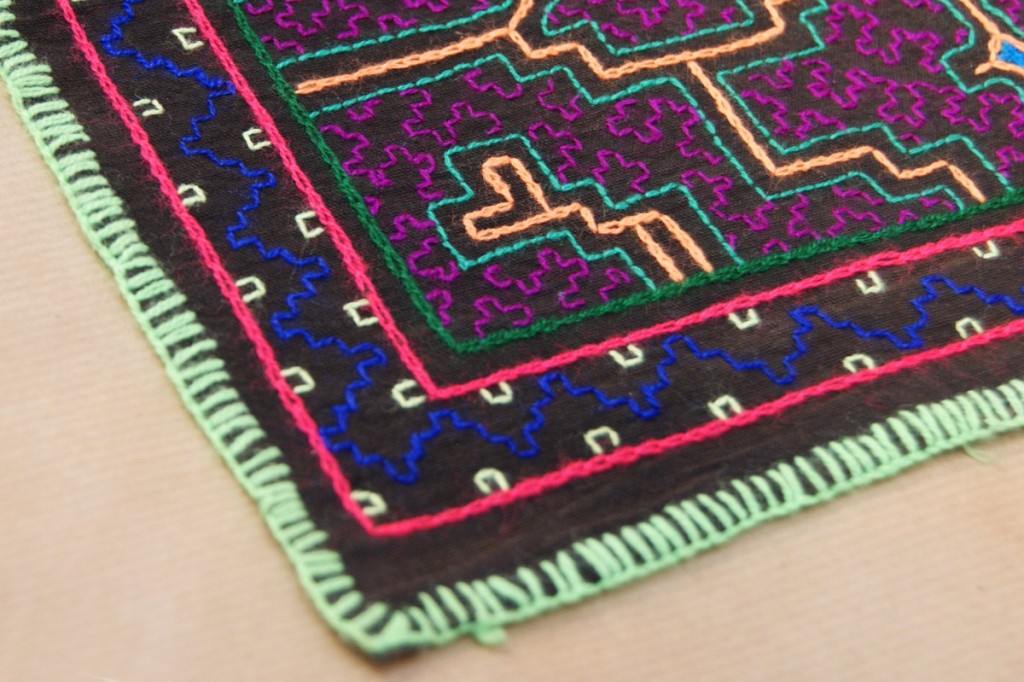
Vintage Shipibo Kené Textiles — Rare Small-Format Collection. A Collection Preserved for Two Decades
We are pleased to offer a small and exceptional collection of original Shipibo textiles that has remained carefully stored for approximately two decades. These pieces were individually selected at the time for the precision and beauty of their patterns, their particularly vivid colours, and the quality of their execution.
What makes this collection especially unusual is its size. Many traditional Shipibo textiles are considerably larger, including cloths intended to be worn around the waist or used within the household. These are complete designs presented on remarkably compact pieces of cloth, generally around 35 × 35 cm or smaller. Despite their modest dimensions, each contains a complete and carefully composed pattern.
No two pieces are identical. Each is an individual work, hand-painted or embroidered by a Shipibo artisan, and represents a particular moment in a living artistic tradition. Having been selected and preserved around twenty years ago, this is not a newly assembled collection but a small archive of pieces we considered particularly beautiful at the time.
They make highly decorative objects in their own right and are especially suited to an altar or ceremonial space, as a wall piece, or as a background upon which crystals, jewellery, ceremonial tools and other treasured objects can be displayed.
The Shipibo-Konibo and the Ucayali
The Shipibo-Konibo are an Indigenous people of the Peruvian Amazon whose traditional territory is centred around the Ucayali River and its tributaries. Their culture is particularly recognised for its sophisticated plant knowledge, ceremonial traditions, music and extraordinary geometric art.
These elements should not be regarded as separate cultural curiosities. Within Shipibo understanding, plants, songs, perception, craftsmanship and the ordered patterns of the world are closely related. Knowledge has traditionally been transmitted through families, apprenticeship and direct practice, and continues to develop as part of a living contemporary culture.
The Shipibo-Konibo have become especially well known internationally through their traditions surrounding "Ayahuasca". Although Ayahuasca is important within Shipibo ceremonial practice, their culture and artistic traditions are considerably broader and should not be reduced to Ayahuasca alone.
Read our full article about the Shipibo-Konibo people here.
Kené — The Language of Pattern
The extraordinary geometric designs for which the Shipibo are known are called "kené". They can be found painted and embroidered onto cotton textiles, as well as on ceramics, clothing, beadwork, ceremonial objects and, historically, bodies, houses and other surfaces.
Shipibo women have traditionally been the principal creators and transmitters of kené. Girls may begin learning the principles of drawing, painting and embroidery from their mothers, grandmothers and other women while still young. With experience comes the ability to create increasingly complex compositions rather than merely reproduce a fixed pattern.
A finished textile can appear almost impossibly intricate: lines divide and reconnect, turn through angular pathways and form larger structures containing smaller structures. The eye can follow one pathway only to discover that it belongs to a much larger composition. Balance is maintained without the mechanical repetition characteristic of industrial printing, giving each handmade work its own identity.
Painted pieces traditionally make use of pigments and dyes obtained from locally available natural materials, while embroidered textiles introduce strong coloured threads against the cloth. Contemporary pieces may incorporate newer materials and colours as the tradition continues to evolve.
Icaro: When Pattern and Song Meet
Perhaps the most fascinating aspect of kené is its relationship with the sacred ceremonial songs known as "Icaro".
Popular accounts sometimes describe a Shipibo textile as the literal transcription of an Icaro, almost as though the lines were musical notation that could simply be read and sung. The traditional relationship is more subtle. Pattern and song are better understood as different expressions of an underlying concept of harmony and ordered knowledge rather than every textile being the written score of one particular song.
Within Shipibo ceremonial understanding, Icaro may be used by healers to establish, restore or maintain order during their work. Kené similarly expresses ordered structures through line and form. One is experienced through sound and the other through vision, and within the Shipibo worldview these sensory domains can be intimately connected.
This connection has sometimes been compared in Western terminology with synesthesia—the experience in which sensory domains such as sound, colour and form overlap. The comparison is useful, but it should not be mistaken for a complete explanation of the Shipibo worldview.
Ayahuasca, Vision and the Patterns
The association between Shipibo patterns and Ayahuasca is genuine, but it is often simplified outside the culture.
During Ayahuasca ceremonies, Shipibo healers and other participants may describe visionary experiences involving complex geometric structures, networks and patterns. These can bear a striking resemblance to kené. Within traditional interpretations, such forms may be understood as perceptions of an underlying order rather than simply decorative imagery produced by the imagination.
Ayahuasca also has an important place in the apprenticeship of many Shipibo healers. Alongside other practices, it may form part of a much longer discipline involving isolation, dietary restrictions and relationships with particular plants, commonly described today as a Master Plant Dieta.
Within these traditions, plants may be regarded as teachers from which knowledge and Icaro can be received. A healer may understand a song as having been learned through the relationship established with a plant rather than consciously composed in the Western sense. Different healers and lineages may explain these experiences differently, and they should therefore be presented as elements of Shipibo traditional knowledge rather than as objectively established mechanisms.
Importantly, kené should not be described simply as "Ayahuasca art". Women have transmitted the artistic language of kené across generations, and its existence belongs to the wider Shipibo cultural world. Ayahuasca provides one particularly important context in which the relationship between vision, pattern and song becomes apparent, but it is not the sole source of the designs.
Pattern as More Than Decoration
Within its traditional context, kené is not regarded merely as ornamentation. Patterns can be associated with ideas of beauty, harmony, identity, protection and the ordering of people and spaces.
This helps explain why Shipibo designs occur on objects that surround daily and ceremonial life. The pattern does not simply depict a sacred object or tell a story in the way a figurative painting might. The geometry itself carries significance.
For an outside observer, a Shipibo textile can therefore be appreciated at several levels. It is a remarkable piece of Indigenous geometric art, an individual expression of the woman who created it, and at the same time part of a much larger cultural language connecting craftsmanship, perception, song and cosmology.
For a much deeper exploration of kené, Icaro, Ayahuasca and the relationship between sound and visual pattern, please read our full article Shipibo Designs and the Living Geometry of Icaros.
Individual Pieces from an Older Collection
The textiles offered here deserve particular attention because they come from an older collection acquired approximately twenty years ago and retained ever since. We selected these examples specifically for their unusually beautiful compositions, precision and bright colours.
Their compact dimensions make them particularly appealing. At approximately 35 × 35 cm and smaller, they contain the visual complexity of much larger Shipibo textiles within a complete, concentrated composition. Such small full-pattern pieces are considerably less commonly encountered than the larger cloths traditionally produced for clothing and other purposes.
Each textile is offered individually and exactly as it is. Minor irregularities, variations in the cloth, pigment, stitching or geometry are inherent characteristics of a handmade Indigenous work and form part of its individuality rather than imperfections to be corrected.
These are pieces for the collector and connoisseur, but equally for anyone who feels a genuine appreciation for Shipibo craftsmanship. Framed or displayed as they are, used as an altar cloth, or serving as a background for treasured ceremonial objects, each preserves a small but remarkable example of this living Amazonian artistic tradition.
Context Note / Disclaimer
References to healing, medicine, Ayahuasca, Icaro or ceremonial functions in this description refer to the cultural and traditional understanding of the Shipibo-Konibo people. They are presented for historical, educational and cultural context only and are not intended as medical claims or as a substitute for modern healthcare. No therapeutic effect of the textiles themselves is claimed or implied.
Cultural and Copyright Note
The Shipibo designs represented by these textiles are Indigenous artwork and cultural expressions. We do not claim authorship, copyright or cultural ownership of the designs themselves. Where the individual artist is unknown, this should not be interpreted as absence of authorship: the pieces originate from a living artistic tradition maintained by Shipibo-Konibo artists and communities.
The written description and accompanying original editorial text are protected under copyright law and may not be reproduced or distributed, in whole or in part, without prior written permission.