

Introduction to Ipe Roxo / Pau d'Arco
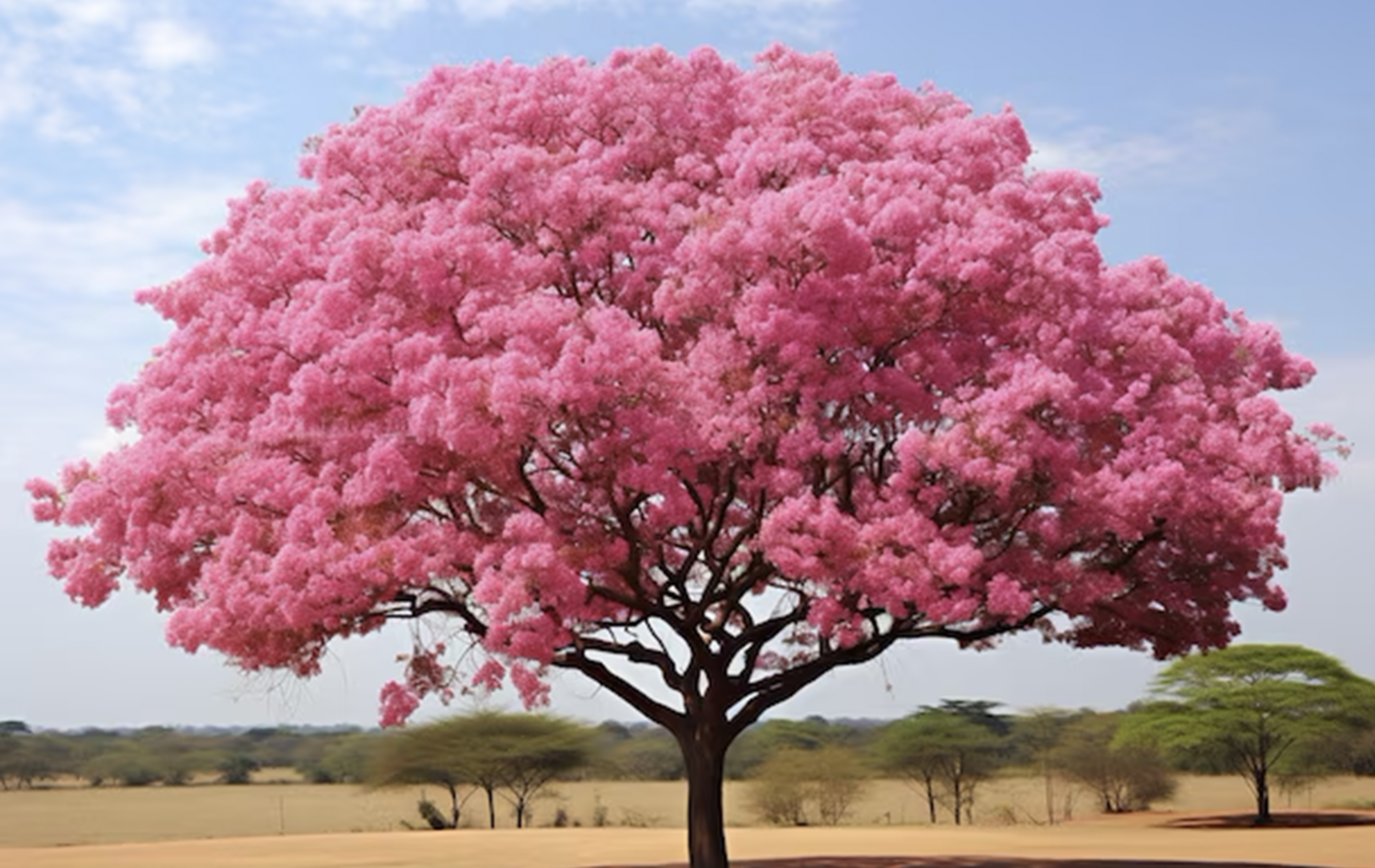
Pau d'Arco, also known as Ipe Roxo ("Purple wood" in Portuguese), refers to several species of the Tabebuia tree, especially Tabebuia impetiginosa and T. avellanedae. These majestic trees grow throughout South and Central America, particularly in the Amazon rainforest, and are recognizable by their hard wood and vivid purple-pink blossoms. While the entire tree holds cultural value in many Indigenous traditions, it is the inner bark that has long been regarded as especially significant.
Beyond its visual beauty, Pau d’Arco has a long-standing presence in forest cosmologies as a tree associated with resilience, resistance, and longevity. Its wood is famously dense and naturally rot-resistant—qualities that many tribes symbolically associate with spiritual strength and endurance.
Spiritual and Energetic Significance
Among several Indigenous peoples of the Amazon, including the Shawadawa, the inner bark of Pau d'Arco is traditionally burned to produce sacred ashes used in Rapé. These ashes are believed to support spiritual clarity, grounding, and energetic cleansing. Though some plants are credited with mystical or godlike qualities, Pau d'Arco holds a place of honor for its reputed ability to attract so-called "alpha rays" — believed to positively influence the body’s energy field and support a state of balance and purification.
In some traditions, Pau d’Arco is also seen as a “protector tree.” The ashes are thought to create a subtle field of steadiness around the user, helping to dispel confusion or emotional heaviness, restoring a sense of inner structure. The firmness of the tree’s wood echoes in the medicine: Pau d’Arco is often described as a Rapé ash that “stands you upright from within.”
Herbal Traditions and Health-Supportive Use
In traditional herbalism, Pau d'Arco bark has been used in various preparations, most commonly teas and decoctions, intended to support a healthy immune system and maintain internal balance. Its inner bark contains naturally occurring compounds like lapachol and beta-lapachone, which are of interest for their antimicrobial and antioxidant properties. While modern science is still studying these effects, many cultures have long turned to Pau d'Arco as a general health-supportive remedy, especially for digestive well-being and cleansing protocols. It has also been consumed as a tonic to support healthy skin and respiratory function, always with the understanding that such uses are part of a holistic approach to wellness.
Across the Amazon, Pau d’Arco teas are used during seasonal transitions, fasts, and after periods of energetic depletion. Though every region has its own customs, the bark is generally considered a plant that supports structural integrity—physically, emotionally, and energetically.
Traditional Ash Production
In the context of Rapé production, the process of creating Pau d'Arco ash is one of care, precision, and deep respect for the plant. Only the inner bark is used, never mixed with other wood or materials. After careful drying, a fire is lit in a controlled manner to produce the ash. A surprisingly large amount of bark is required to create even a small amount of fine ash, making it a labor-intensive and resource-sensitive process.
Timing is critical: the ashes must be collected immediately after the fire has gone out and before the morning dew arrives. This preserves the dryness and purity of the ash, preventing clumping or contamination. Once gathered, the ashes are sifted by hand or with fine sieves to ensure uniform texture and remove unburned residue.
Among some tribes, the ash-making process is accompanied by prayer or song. The fire is treated as an active participant, not merely a tool. The moment the bark becomes ash is seen as a transformation of the plant’s spirit—its solid form yielding to its subtle form, which then carries its virtues into the Rapé.
Additional Cultural Notes About Pau d’Arco Ash
- A Tree of Durability and Resistance
Pau d’Arco is one of the hardest woods in the forest and naturally resistant to fungus and decay. This remarkable durability has symbolic meaning: the ashes are often associated with strengthening one’s boundaries, reinforcing clarity, and standing firm in moments of internal or external challenge.
- A Preferred Ash in “Grey” Rapés
Because Pau d’Arco produces a relatively light, clean ash, it is often chosen for daily-use Rapés, blends meant for clarity rather than heaviness, and for users who prefer a sharp, quick-opening effect. Grey Rapés are known for their immediate “bite,” and Pau d’Arco plays a notable role in that character.
- Compatibility With Tabaco Varieties
Pau d’Arco ash pairs well with Sabia Tabaco, Corda Tabaco, and Moi Tabaco. Its clean profile allows the Tabaco to dominate the energetic signature while the ash provides structure and direction.
- From Ash to Sacred Medicine
These ashes are then stored in clean, airtight containers to maintain their quality until they are blended into Rapé. In this form, Pau d'Arco ash becomes part of a sacred medicine tradition, used to support emotional clarity, energetic protection, and grounding during ceremony or personal ritual. While it carries no psychoactive properties on its own, its contribution to Rapé is valued for its energetic purity and capacity to enhance focus and spiritual presence.
Some practitioners describe Pau d’Arco as creating a “straight line” through the mind—an internal axis of clarity along which thoughts can organize themselves. It does not push or overwhelm but subtly re-establishes coherence.
Respecting Cultural Roots
As always, Pau d'Arco should be approached with respect for its cultural origins and traditional uses. Its role in Indigenous medicine is not merely botanical but spiritual and symbolic, rooted in a worldview that sees health as an alignment of body, mind, energy, and environment. Those who choose to work with Pau d'Arco ashes in a modern context are encouraged to do so with mindfulness and gratitude for the wisdom traditions from which it comes.
Equally important is sustainable harvesting. Because the inner bark is used, Pau d’Arco should be taken only from trees already felled by natural causes or harvested in a way that does not compromise the tree’s life. Responsible use ensures that this revered tree remains part of the forest’s future, not only its past.
Setting the Standard for Ultra-Fine Ashes
We take great care to reprocess all received ash stock to ensure the highest quality for your use. Ashes often arrive with natural impurities such as small bits of charcoal, sand, and other particles, as they are traditionally prepared without modern equipment. To guarantee purity and consistency, we meticulously sieve all ashes, removing any rough bits and impurities. The result is an ultra-fine powder, sifted to a 150-micron fineness using laboratory-grade sieves and advanced dehydrating equipment. This process ensures smooth, clean ashes, providing an enhanced experience for all your Rapé preparations.
Create your own Rapé with Tabaco powders and Ashes
Ever been curious how to make your own blend of Rapé? Rapé preparations are usually based on two distinct ingredients: Tabaco and ashes, which can be mixed with a wide variety of other aromatic or medicinal components to your liking. More information on the process can be found here.
Disclaimer
The information provided above is for historical, educational, and scientific purposes only. It should not be interpreted as a recommendation for the specific use of our products. Any statements about traditional uses are informational. The use and application of our products are the customer's decision and responsibility.
Copyright Notice
All content, including this article, is protected under copyright law. Any unauthorized reproduction, distribution, or use of this material is prohibited. Duplication of this content, in whole or in part, without written consent, is a violation of copyright regulations.
Availability
The following varieties of Rapé are created with Ipe Roxo ashes and are available at Katukina.com: